
UK Invests £50m to Build Critical Minerals Supply Chain
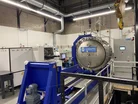
The UK has committed £50m (US$66m) to boost the production of critical minerals in an effort to reduce its reliance on foreign supply chains, according to an announcement by Industry Minister Chris McDonald.
The investment will go towards mineral extraction, processing and recycling, and builds on the more than £200m (US$264m) already committed to the mining sector by the UK government. According to the UK Government website, the funding will support high value jobs and reduce the UK’s reliance on overseas imports.
The announcement follows an agreement between G7 leaders to reduce dependence on any single non-G7 supplier of rare earths and permanent magnets to below 60% by 2030. According to the International Energy Agency (IEA), China currently accounts for 70% of rare earth extraction, and 90% of the world’s processing capabilities.
Chris McDonald says: “Critical minerals are vital for our national security, and this targeted funding will support companies in ramping up domestic production, helping to create new jobs and opportunities in local communities, whilst building more resilient supply chains.
“Through our Critical Minerals Strategy, we’re leveraging Britain’s mineral wealth, attracting new investment and forming dynamic relationships with partners across the world to boost our economic security.”
Three-pillar funding structure
The funding programme will be split into three pillars. The first, dubbed the Magnet Hub, will commit £20m (US$26m) to establishing a UK facility to develop, test and boost rare earth magnet manufacturing.
The second pillar, called the Critical Minerals Accelerator, will put £25m (US$33m) towards collaborative projects in critical mineral extraction, processing and recycling. The third pillar, the Demand Aggregation Platform, will use the remaining £5m (US$6.6m) to fund a collective buying group to enable UK companies to strike better supply deals.
Chris launched the programme at the Wilton Centre in Teesside, one of Europe's largest R&D campuses, where he toured firms at the forefront of the UK’s domestic critical minerals development. One of them, DEScycle, is a UK startup that uses chemical solvents to extract metals from waste electronics.
Fred White, Chief Commercial Officer and Co-Founder at DEScycle, says: "We are nearing construction completion of our world-first demonstration facility, with key equipment installed ahead of commissioning.
“Our disruptive technology is reshaping how the UK views e-waste, transforming its treatment into a sovereign form of urban mining and Teesside’s world-leading industrial heritage, skilled workforce makes it the ideal location for our facility, deploying infrastructure directly supporting the UK’s Critical Minerals Strategy.”
Rare earth magnet production returns to UK
Britain's first commercial rare earth magnet plant in 25 years opened in January 2026 at Tyseley Energy Park in Birmingham.
Operated by HyProMag, the facility uses Hydrogen Processing of Magnet Scrap (HPMS) technology developed by the University of Birmingham's Magnetic Materials Group to extract and recycle rare earth magnets from end-of-life equipment.
HyProMag is owned by Maginito Limited, itself 79.4% owned by Mkango Resources and 20.6% by CoTec Holdings. By April 2026, the facility had produced 9.2 tonnes of recycled NdFeB alloy powder, with customer work under way with Siemens and a phased expansion toward 1,000 tonnes per annum under evaluation.
The plant can recover more than 400kg of rare earth alloy per batch and can produce 100 tonnes per annum on a single shift, scaling to more than 300 tonnes on multiple shifts.
"This is a landmark achievement and transformational for rare earth supply chains, bringing back magnet manufacturing to the UK after 25 years," says William Dawes, Chief Executive Officer at Mkango Resources.
William says the HPMS process delivers a cost advantage alongside a minimal carbon footprint compared with conventional magnet production methods.

Supply chain diversification
The £50m commitment is part of the UK's broader Vision 2035 strategy, which targets 10% of annual domestic critical mineral demand met by UK production, and 20% by recycling by 2035.
Britain is also exploring partnerships with the US and South Korea, focusing on supply chain collaboration, processing capacity and investment flows.
The approach mirrors efforts agreed at the G7 Évian summit earlier this month, where leaders committed to reducing dependence on any single non-G7 critical mineral supplier. In the US, the Pentagon is backing domestic rare earth processing through investments in firms including Hertha Metals and Phoenix Tailings.
The materials covered by the programme underpin some of the fastest-growing industries in the global economy. Rare earth magnets are essential components in EV motors, wind turbine generators, defence systems and consumer electronics. China currently dominates supply across all of them.
Company portals



Executives
Chris McDonald
Minister for Industry
Fred White
Chief Commercial Officer & Co-founder
William Dawes
Chief Executive Officer