
AmForge, Flash Metals & Greenbrier Plan WV Rare Earth Hub
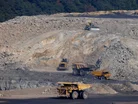
Flash Metals USA, AmForge Corporation and Greenbrier Smokeless Coal Company have announced plans for a US$150m rare earth processing facility in Greenbrier County, West Virginia. The hub will recover rare earth elements from coal tailings and slurry.
The alliance was revealed in a joint announcement coordinated by West Virginia’s Secretary of State's office.
The project is expected to create nearly 250 jobs once fully operational, according to the statement, and production would draw on legacy coal waste from Greenbrier Smokeless's West Virginia operations, before scaling to a wider hub-and-spoke processing network.
- The project is worth US$150m and expected to create nearly 250 jobs once fully operational
- Roughly 85-90% of US rare earth supply currently comes from China, according to Flash Metals
- Feedstock will come from West Virginia coal tailings, plus offtake agreements covering Greenland and Cameroon
- The facility will operate as a hub-and-spoke model, with Greenbrier County as the central processing hub
- A January 2027 deadline will ban Chinese-origin rare earth magnets from covered US defence systems

Steve Ragiel, President of Flash Metals, says the US currently relies on China for the vast majority of its rare earth supply.
"Roughly 85 or 90% of the rare earths that we use are coming out of China," he says.
"They are a bit of an unreliable supplier of a stream of raw materials because from time to time China shuts off those materials."
Kris Warner, West Virginia's Secretary of State, welcomed the announcement, saying the project could unlock new value from land previously written off due to coal waste.
"We've all looked at coal slurry ponds and coal slag and coal tailings as a reason why a property couldn't be developed," says Secretary Warner.
"But when they take rare earth minerals out of it, the potential is endless."
“ The potential is endless ”
Part of a wider China pushback
The West Virginia hub adds to a growing list of US efforts to build domestic rare earth capacity outside China. The Pentagon has committed US$500m to rare earth refiner Phoenix Tailings for a separate midstream processing facility, while Houston-based Hertha Metals is targeting a high-purity iron gap in the same supply chain.
Both projects are responses to a January 2027 deadline that will ban Chinese-origin rare earth magnets from covered US defence systems.
It is not just the US pushing back. G7 leaders agreed at the June summit in Évian to erode dependence on any single non-G7 supplier of rare earths and permanent magnets to below 60% by 2030.
Canada and Japan are also discussing joint stockpiling of critical minerals, including graphite and gallium.
Britain has made a similar move, committing £50m (US$66m) to critical minerals extraction, processing and recycling as part of its own push to cut reliance on China.
How the alliance will work
Drew Horn, Chief Strategy Officer of AmForge, says the Rupert site was chosen partly for its existing infrastructure.
"The infrastructure that remains and is still in place is ideal," Drew says. "It's ideal for shipping of raw materials and doing clean processing on a location where we can anchor it with feedstock coming from the mine."
Flash Metals will supply the extraction technology, and Greenbrier Smokeless will provide coal tailings from its own operations. AmForge contributes offtake agreements to bring in additional feedstock from Greenland and Cameroon.
The facility is designed as a hub-and-spoke processing network, with Greenbrier County serving as the central hub. Development is expected to roll out in phases as the hub-and-spoke model expands beyond the initial Rupert site.
Additional spokes could eventually process material from further coal sites across West Virginia and neighbouring states.
Greenbrier County is traditionally a coal-producing region, so the deal presents an opportunity to keep extracting value from the same land, just for a different set of materials.
Company portals





Executives
Drew Horn
Chief Strategy Officer
Steve Ragiel
President