KIND and Hyundai Engineering Back Ioneer Lithium Mine
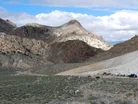
Australian operator ioneer has secured the backing of the Korea Overseas Infrastructure and Urban Development Corporation (KIND) and Hyundai Engineering at its Rhyolite Ridge lithium-boron mine in Esmeralda County, Nevada.
According to a statement from ioneer, the agreements cover cooperation in engineering, procurement and infrastructure planning. The partnerships effectively reduce execution risk at Rhyolite Ridge ahead of a final investment decision (FID), slated for the second half of 2026.
According to commodities researchers Fastmarkets, China controls approximately 70% of global lithium refining and battery component manufacturing capacity.
"Rhyolite Ridge has been a decade in the making," says Bernard Rowe, Managing Director at ioneer. "Working with trusted Korean partners with a track record of on-time and on-budget delivery brings us closer to breaking ground and delivering urgently needed lithium and boron."

A decade in the making
Beginning in 2016, ioneer has invested more than US$220 million into the development of Rhyolite Ridge over the last decade. The site hosts North America's only known lithium-boron reserve and is one of only two deposits of its kind globally, according to ioneer.
According to the company, process optimisation efforts have cut chemical processing times by a third and increased throughput by 25%.
Once operational, the project is designed to produce 27,800 tonnes of battery-grade lithium hydroxide and 135,500 tonnes of boric acid annually over an initial 77-year mine plan. All chemical refining will happen on-site in Nevada, generating between 275 and 300 permanent jobs during operations.
"Across the metrics that matter most: permitting, construction readiness and long-term supply certainty, Rhyolite Ridge stands apart from other critical mineral projects," says Seung Dong Lee, Head of Process Plant Business Execution at Hyundai Engineering.
He adds: "This letter of intention reflects our confidence in ioneer's leadership and our commitment to securing a reliable critical minerals supply chain."
Western push to diversify supply
At the G7 summit in Évian-les-Bains on 17 June 2026, leaders issued a joint declaration targeting a reduction in single-nation dependence on rare earths and permanent magnets to below 60% by 2030. The summit also established a new coordination platform with the International Energy Agency (IEA), covering stockpiling and supply monitoring, starting with lithium and nickel.
The US Department of War's Office of Strategic Capital has conditionally committed US$500 million to rare earth processor Phoenix Tailings. The move is part of a wider US$1 billion push to build domestic supply chains of materials used in high-performance permanent magnets for defence and clean energy applications.
On 22 June 2026, the UK announced a £50 million (US$66 million) programme to build a British rare earth magnet manufacturing hub, a project accelerator and a demand aggregation platform to pool industrial purchasing across sectors.
ioneer signed a supply agreement with South Korean battery materials firm EcoPro Innovation in 2021, making the KIND and Hyundai Engineering agreements a continuation of an existing relationship with South Korea, rather than an entirely new one.
Company portals

Executives
Bernard Rowe
Managing Director

Seung Dong Lee
Head of Process Plant Business Execution