
What Rio Tinto & Glencore Merger Collapse Means for Mining

After a period of unsettled discussions, Rio Tinto and Glencore have called off their US$260bn merger, citing the inability to reach a satisfying deal.
With plans to create the world's main copper producer, the two mines had been hoping to boost capabilities for the mines and their shareholders.
However, following Rio Tinto's proposal to maintain both the Chairman and Chief Executive Officer roles, as well as proforma ownership of the company, Glencore cited that this deal undervalued its contribution.

Prioritising sustainable operations
Rio Tinto is a leading global mining and metals company, with a presence in more than 40 countries and a dominance across Australia and North America.
For more than 150 years, it has been working to mine responsibly, reducing its carbon footprint, forming partnerships for technologies to decarbonise steel and aluminium production and forming new products from waste.
Over the years, it has attempted to merge with Glencore, with attempts in 2014, 2024 and in 2026.
Glencore had been a desirable partner for Rio Tinto, with its globally diverse natural resource capabilities. It has become a major producer of of more than 60 commodities which advance everyday life. It produces, processes, recycles and sources vital materials that support decarbonisation. It is one of the major recyclers of end-of-life electronics and critical metal-containing products, making it an advantageous partner.
"At Glencore, we are committed to being a responsible and ethical business operator that seeks to establish and strengthen positive relationships with our various stakeholders," says Gary Nagle, CEO of Glencore.
All supply chain, sustainability, Scope 3 and net zero leaders should attend:
- Procurement and Supply Chain LIVE: The Net Zero Summit - QEII Centre, London, March 4-5
- Procurement and Supply Chain LIVE: The US Summit - Navy Pier, Chicago, April 21-22
Co-located with Sustainability LIVE, these events brings together CSCOs, CSOs and senior decision-makers at a moment when sustainability, supply chains and commercial performance are increasingly interconnected.
Tickets can be booked online today for The Net Zero Summit and The US Summit. Group discounts available.
Beneficial intentions
The merger would have created a global giant with an enterprise value exceeding US$260bn.
The initial revival of the merger, in January, followed a period of deal-making across the natural resources sector, where there was a successful US$53bn merger between Anglo American and Teck in September 2025.
The main driver for the merger was the global demand for copper. Prices for the metal hit more than US$13,3000 per tonne on 27 January, 2026. Though Rio Tinto is a significant producer in the copper market, its main earnings intake is from iron ore. Glencore, however, has a range of copper development sites across the Democratic Republic of Congo, Peru and Argentina.
Glencore's CEO, Gary Nagle, says the company's goal is to become "the biggest copper producer in the world", which showed itself as desirable to Rio Tinto.
The demand for copper is rising, as it is a major material in power distribution and cooling systems across data centres, making it a key commodity as AI infrastructure increases. The International Copper Study Group anticipates a copper supply shortfall of 10 million tonnes by 2040, meaning that mining companies are working to get as many assets as they can.
An end to a merger
Despite this, however, it appears as though the merger will no longer go ahead. In its announcement, Rio Tinto states: "Rio Tinto has determined that it could not reach an agreement that would deliver value to its shareholders."
Through thorough discussions and assessments, Rio Tinto suggests the merger did not reflect its aims of prioritising long-term value or deliver strong shareholder returns. Following the news, shares in Glencore initially fell by 10.8%, though some of these losses have been reclaimed. Meanwhile, shares in Rio Tinto dropped by 1.4%.
Glencore responds to Rio Tinto's statement: "The key terms of the potential offer [...] significantly undervalued Glencore’s underlying relative value contribution to the combined group, even before consideration of a suitable acquisition control premium.
"We concluded that the proposed acquisition on these terms is not in the best interests of Glencore shareholders."
As the copper business is set to be increasingly valuable as demand grows, Glencore was positioned with high value potential. Though this merger appears to have come to an end, Glencore is working to secure supply routes and beneficial agreements elsewhere.

Executives
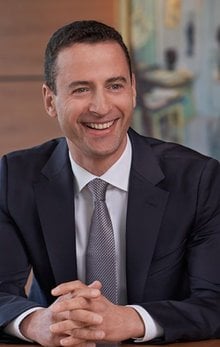
Gary Nagle
CEO