Tesla's Graphite Gamble: Why Syrah Resources Had to Succeed
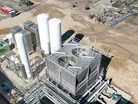
Tesla has withdrawn its threat to terminate its contract with Syrah Resources, accepting that the company's Vidalia plant in Louisiana is now producing conforming Active Anode Material (AAM) for its electric vehicle batteries.
As the only large-scale, vertically integrated producer of graphite anode materials outside of China, the Vidalia facility is a critical piece of infrastructure in the US push to localise battery supply chains.
The dispute had been rumbling on since July 2025, with Tesla extending its remedy deadline four times before finally withdrawing the termination notice, a move that underscores its commitment to securing non-Chinese graphite.
Under the 2021 agreement, Syrah is contracted to supply Tesla with 8,000 metric tons of anode material over a four-year period.

Why graphite matters
Graphite is critical to the production of lithium-ion batteries which power electric vehicles. At present, China produces around 70% of the world’s natural graphite and controls more than 90% of the world’s anode manufacturing capacity, according to data from Benchmark Mineral Intelligence.
Tesla and Syrah Resources are aiming to break away with the first vertically integrated chain outside of China, as part of a broader move by the US to reduce its dependence on China by focusing on domestic critical mineral supply chains.
China introduced additional export controls on graphite specifically targeting the US in December 2024. The controls left US companies no time to stockpile materials, further amplifying the importance of establishing a domestic supply chain.
Since the contract between Tesla and Syrah was signed in 2021 the price of graphite has fallen by roughly a third, from around US$6.90/kg to US$4.60/kg, creating significantly harder operating conditions for Syrah.
What Vidalia represents
Through the Vidalia facility, Australia's Syrah Resources is aiming to become the first major non-Chinese supplier of natural graphite to the US battery supply chain. It draws raw graphite from Syrah's Balama mine in Mozambique before processing it into battery-grade AAM on US soil.
Most Western attempts to reduce dependence on Chinese graphite so far have stopped at the mining stage. The processing and refining capability, the final step that turns raw graphite into something an EV battery can use, has remained almost entirely in China.
The US Department of Energy was involved in approving the extensions to Tesla's cure deadlines. Washington has a direct financial stake in Vidalia, having provided federal funding as part of the US push to build domestic battery supply chains.
Final qualification with Tesla is still pending, but Syrah has demonstrated it can produce conforming material, which is the important first step. The question now is whether Vidalia can do it consistently and at scale.
What it means for critical mineral supply chains
Replicating a fully-integrated graphite supply capability outside China has taken years, significant federal investment and, in Syrah's case, a near-terminal dispute with its primary customer, Tesla.
The fact that Tesla extended cure deadlines four times rather than killing the contract is the most telling detail. With the tumbling graphite prices, a Chinese supplier would have been the cheaper option by far.
Tesla stayed anyway, which shows that the strategic value of a non-Chinese supply chain outweighs the commercial inconvenience of working with a facility that is still building up.
China's decision to introduce graphite export controls specifically targeting the US in December 2024 served as a wakeup call. US companies that relied on Chinese graphite were left with no buffer and no time to adjust.
Syrah still has final qualification to achieve and the economics have tightened significantly since 2021, but the Vidalia facility is producing conforming material, Tesla is committed and Washington is watching.
For a supply chain that nearly collapsed, that is a good position to be in.