
A Look at Mining Giant BHP's Performance in H2 2025
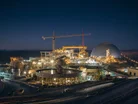
BHP reports strong operational performance in the second half of calendar year 2025 (H2 CY25), with copper prices up 32% year on year and record production across key assets.
At the same time, the mining giant has transformed its Escondida Norte pit in Chile into a fully autonomous operation, making it one of the first large-scale mines globally to reach this milestone.
According to BHP CEO Mike Henry, the company delivered very strong performance with operational records at copper and iron ore assets.
He said: "This was achieved safely and in a positive commodity price environment, with copper prices up 32% and iron ore prices 4% higher year on year."
The results came as momentum moderated in construction, manufacturing and infrastructure investments during H2 CY25, though India is emerging as a key engine of demand with strong domestic activity sustaining steel and rising copper needs.
Record copper production drives results
BHP increases its financial year 2026 (FY26) group copper production guidance following stronger delivery across multiple sites.
Escondida achieved record concentrator throughput, while Antamina in Peru has lifted its production guidance.
The Spence copper mine in Chile and Copper SA are tracking to plan, with Copper SA achieving record refined gold output.
All sustainability, net zero and sustainable procurement leaders should attend:
- Procurement & Supply Chain LIVE: The Net Zero Summit - QEII Centre, London, March 4-5
- Procurement & Supply Chain LIVE: The US Summit - Navy Pier, Chicago, April 21-22
Co-located with Sustainability LIVE, these events brings together CPOs, CSCO, CSOs, ESG leaders and senior decision-makers at a moment when sustainability, supply chains and commercial performance are increasingly interconnected.
Tickets can be booked online today for The Net Zero Summit and The US Summit. Group discounts available.
Mike highlighted that forecast global growth in 2026 is around 3%, creating a positive backdrop for commodity demand. He added: "BHP enters the second half of FY26 with strong operating momentum.
"We are investing for the decade ahead, with a significant copper growth pipeline and a pathway to approximately 2 million tonnes (Mt) of attributable copper production in the 2030s."
The company's copper portfolio continues to benefit from operational improvements and strategic investments across its global asset base.

Strong iron ore and potash performance
Western Australia Iron Ore achieved record first half production and shipments, contributing to the company's overall performance. Volumes from Samarco in Brazil rose as a result of strong operational performance, adding further strength to the portfolio.
The Jansen potash project in Canada is on track to begin production in mid-2027, representing a significant diversification opportunity for the business. BHP says the project could enable the company to meet growing global demand for agricultural nutrients as population growth drives food production requirements.
The potash development forms part of BHP's broader strategy to diversify its commodity portfolio beyond copper and iron ore.
Iron ore operations in Western Australia continue to set new benchmarks for productivity and efficiency across the company's integrated mining and rail network.
Autonomous mining transforms Escondida Norte
Located 170 km to the southeast of Antofagasta in Northern Chile, Escondida is a copper porphyry deposit that has been in operation since 1990. It is the world's largest producer of copper concentrates and cathodes.
The mine has two major pits – Escondida and Escondida Norte – feeding three concentrator plants and two leaching operations.
BHP says: "With a remaining life of several decades and a resource base of over 26 billion tonnes, Escondida is positioned to help lead copper production well into the future."
The Escondida Norte pit is now fully autonomous, with 33 autonomous trucks and 11 autonomous drills operating across the pit.
Around 30% of Escondida's production comes from the autonomous zone, with over 350,000 tonnes of material moved daily.
More than 5,000 workers are trained in new technologies, with 64% female participation in autonomy-related roles. BHP says: "These achievements reduce risk, enhance productivity and create a safer working environment."
More electrifying progress
The company adds that autonomous operations at Escondida are "not just about technology – they represent a strategic response to industry challenges such as declining ore grades and increasing operational complexity".
BHP goes on: "As we grow our copper production, we remain focused on safety, sustainability and innovation - building a future where technology and people work hand in hand to deliver the resources the world needs."
The autonomous operations are alongside other developments in the area of electrification. In November, two battery-electric haul trucks arrived at BHP's Jimblebar iron ore mine in the Pilbara, Australia, marking the start of on-site testing of Caterpillar's battery-electric technology.
Australia's first purpose-built battery-electric heavy haulage locomotives also arrived in Western Australia for trials on the Western Australia Iron Ore rail network.
As global demand for copper accelerates, fuelled by electrification, renewable energy and digital infrastructure, BHP is committed to producing this critical resource more safely, efficiently and sustainably through technological advancement and operational excellence.
Company portals

Executives

Mike Henry
CEO