LKAB and Hertha Metals: Top Five Mining Stories of the Week


The US Department of Defense is committing US$500m to accelerate domestic rare earth midstream processing, as Washington attempts to close the gap between mining and magnet production currently dominated by China.
The Pentagon's Office of Strategic Capital has conditionally committed the long-term debt financing to rare earth refiner Phoenix Tailings, part of a wider US$1bn initiative to build what has been named the Freedom Facility.
The Freedom Facility is not expected to be operational until 2028, but it will process mined concentrates and recycled scrap into light and heavy rare earth metals to be used in US defence systems and domestic industry.
Investment in coal mining operations has reached its highest level since 2012. According to the International Energy Agency's World Energy Investment report, spending on coal extraction will exceed US$180bn by the end of 2026.
The figure represents a 4% rise from 2025. The increase comes as mining companies in China and India expand production capacity and develop transport infrastructure to move coal from extraction sites to export terminals.
The data shows that despite growth in renewable energy, coal mining remains a major focus for investment in Asia. Mining operators continue to open new sites and expand existing operations to meet domestic and export demand.
A US defence deadline banning Chinese-origin rare earth magnets and their constituent materials from covered defence systems is fast approaching, and the race is on to find a domestic supply of high-purity iron.
Neodymium-iron-boron (NdFeB) permanent magnets are used in defence systems, EV motors and clean energy infrastructure, but to make them, high-purity iron is required. At present, most of the high-purity iron used in US magnet manufacture is sourced from China.
As part of a wider pushback against reliance on China for critical materials, the Defense Federal Acquisition Regulation Supplement (DFARS) will ban Chinese-origin constituent materials from covered defence systems from January 2027.
The Swedish Land and Environmental Court granted a permit for mining company LKAB for continued and expanded mining and processing activities in Malmberget, Sweden, as well as measures to reduce impact on air and water.
The permit gives the greenlight for LKAB to go ahead with the establishment of a demonstration plant for fossil-free sponge iron production.
Sponge iron, also known as direct reduced iron, is a metallic product produced from the direct reduction of iron ore.
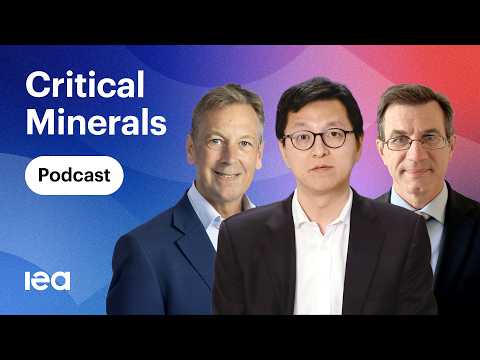
G7 leaders have committed to reducing dependence on any single non-G7 supplier of rare earths and permanent magnets to below 60% by 2030, during talks at the Évian summit in France.
Member states agreed to establish a new coordination platform led by the International Energy Agency (IEA), alongside piloting stockpiling mechanisms for critical minerals. Lithium and nickel will be the two pilot metals, with more to be added later.
According to the IEA, China currently accounts for more than 90% of global rare earth refining capacity. The Évian agreement is the West's strongest attempt yet to loosen that dependence.